Supply chain integration connects the information systems used by organisations across a supply chain — buyers, suppliers, manufacturers, logistics providers, distributors — so operational data flows reliably between them.

Integrated service management coordinates IT service management processes across multiple systems, business units, and external providers.

Integration security protects data, credentials, and access controls across the connections between enterprise applications. A managed integration approach consolidates security responsibility with specialists who handle credential lifecycle management.

DevOps integration connects the tools and systems used across the software development lifecycle so data flows reliably between development, deployment, operations, and service management.

Enterprise software integration connects business applications so they exchange data and coordinate processes reliably. The goal: eliminate manual data transfers, reduce errors, and enable business processes spanning multiple systems to operate as intended.

Prioritize data flow over structure in ITSM integration architecture. Real-time synchronization and event-driven design drive operational excellence.

Maintain IT service reliability at scale: integration resilience, monitoring depth, and managed operations prevent SLA breaches as business demands accelerate.

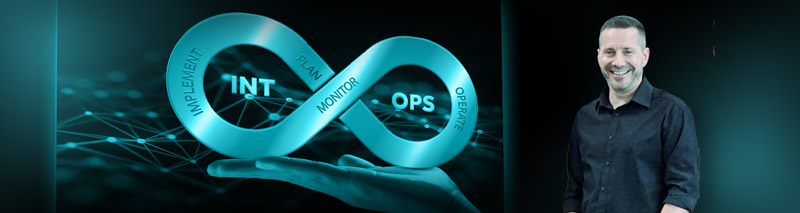
Scale IT operations without hiring: Integration Ops automates 50-70% of manual integration work, freeing teams to focus on strategy and customer value creation.

Budgets are tighter. AI adoption is accelerating. Multi-vendor ecosystems are the new normal. In 2025, IT leaders face a simple truth: the old project-based integration model, and even iPaaS focused only on building, can’t keep up. That’s why we’re scaling IntegrationOps as a Service: a domain-specific, managed capability for IT services that goes live in weeks, adapts automatically, runs 24/7, and delivers guaranteed outcomes, not unpredictable projects. In his latest blog, our CEO & Co-Founder Juha Berghäll shares a founder’s take on our €8M funding and what these trends mean for CIOs, architects, platform owners, integration developers, SecOps, and MSP leaders.

ONEiO Raises €8M to Redefine Enterprise Integrations - ONEiO secured €8M led by Bocap to scale IntegrationOps as a Service, an automation-first model replacing costly, one-off IT projects with fully managed, continuous integrations. The funding supports expansion in the UK and DACH, team growth, and faster delivery for enterprises like Bayer, Volkswagen, and CGI.

With a new UK cloud cluster and expert local team, ONEiO is targeting the region’s enterprise tech landscape with a fully automated, IntegrationOps model, built to disrupt outdated integration methods and accelerate digital transformation.

ONEiO tuo tehokkaat integraatioratkaisunsa osaksi CGI:n globaalia partneriekosysteemiä. Yksi maailman suurimmista IT-konsultointitaloista, kanadalainen CGI, aloittaa yhteistyön suomalaisen ONEiON kanssa.

ONEiO joins CGI’s partnership ecosystem bringing increased efficiency in implementing ServiceNow integrations

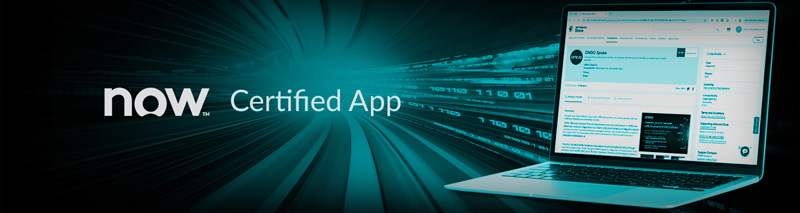
ONEiO announces the launch of its ServiceNow certified ONEiO Spoke, a new app that showcases how ONEiO enables customers within the ServiceNow ecosystem to integrate the Now platform with various partners, vendors, and customers.

Tieto has been using ONEiO for many year. Their customers use a wide range of ITSM tools and we haven't found integration that solution couldn’t handle.

Let us share some war stories from years of experience ServiceNow, Salesforce Jira integration.

ONEiO, a specialist in the automated integration of IT services and business applications has today announced Olaf Schmitz as their new Chair of the Board.

Build a system integration strategy that scales: technology selection, governance, team structure, and operational model alignment drive long-term integration success.

SIAM coordinates multiple IT service suppliers through integrated workflows. Learn how automation platforms modernize service integration management.

LogicMonitor ServiceNow integration can be a difficult to set up. Learn more about the alternatives to integrating LogicMonitor and ServiceNow.

ServiceNow Teams integration opens up a whole new world of collaboration between your departments and your customers.

Plan system integration projects with these 9 critical questions. Ensure scope, requirements, and success metrics are clearly defined upfront.

API integration: connect applications via REST/SOAP APIs to exchange data automatically. Types: synchronous (real-time), asynchronous (queued). Alternative: no-code platforms (Zapier, Workato) and managed integration (ONEiO)

Integration Platforms are evolving from traditional iPaaS towards Next Generation iPaaS and Integration Automation Platforms. Will your business keep up?

ONEiO has raised 7.2M€ in new funding. The seed round was led by Fairpoint Capital and joined by previous investors Inventure and Tesi.

ONEiO has obtained its ISO27001 certificate for its integration service, the applications, systems, and processes for development, operation, and support.

In this guide, we’ll outline why and how communications service providers and their customers benefit from creating a connected service architecture.

In this post, we discuss four service management challenges facing service providers and how service integration can help you become more competitive.

The Service Provider landscape has changed. Learn more how the IT Service Provider’s could approach building an integrated service management ecosystem.

Optimize multi-vendor management with turnkey, scalable end-to-end service integrations. Replace manual coordination with automated orchestration.

Navigate ITSM integrations with actionable strategies. Plan, execute, and optimize integrations across your service management ecosystem.

Das Outsourcing von IT-Services kann für Ihr Unternehmen von Vorteil sein, aber nur, wenn Sie den richtigen Anbieter auswählen. In unserem Leitfaden werden bewährte Verfahren zur Auswahl von IT-Anbietern beschrieben.

In this post, we cover everything you need to know about managing vendor relationships when outsourcing IT services in a multi-vendor environment.

Outsourcing IT services is the fastest way to gain best practices. This post guides you on how to achieve and maintain best practices through outsourcing.

In this post, we'll compare two integration solutions: iPaaS and Integration as a Service. Both have their benefits and limitations, and use cases.

Enterprise Service Bus (ESB) vs. integration as a service: ESBs (Mule, IBM) require teams and infrastructure; Integration as a Service (ONEiO) is cloud-hosted and managed. When to use each.

Compare ITSM portal integration vs. Integration as a Service. Understand cost, complexity, and capability trade-offs for your architecture choice.

Der ultimative Leitfaden zu Integration-as-a-Service. Verstehen Sie das Modell, Vorteile und wie verwaltete Plattformen IT-Service-Operationen transformieren.

ServiceNow Integration Hub comparison: limitations, implementation costs, and why managed integration services outperform native orchestration for enterprise workflows.

Point-to-point integration works at scale but becomes unmaintainable. Integration as a Service provides centralized control and reduced technical debt.

Learn new metrics to evaluate your IT-services ticketing process and discover how strategic integrations can move the needle on those all-important KPIs.

Read our guide for Cisco partners to connect their ITSM tool to the Cisco Technical Assistance Centre (TAC) by Smart Bonding their system.

Enterprise integration patterns are reusable design solutions for connecting enterprise applications and systems. Learn the key EIP categories, messaging patterns, real-world examples, and how to choose the right pattern.

eBonding automates data exchange between systems. Learn how modern integration platforms provide superior alternatives to legacy eBonding approaches.

The whole purpose of the Citizen Integrator is to empower everyone within a business to take control of the tools they use and how they use them.

Service desk integrations connect ticketing systems with monitoring, CMDB, and vendor platforms. Explore integration patterns and deployment best practices.

Master MSP integrations across tech stacks and client ecosystems. Tools, strategies, and best practices for scalable managed services delivery.

Data Integration is the practice of using Data Integration Architecture and Data Integration Tools to ensure consistent access to and delivery of data on the subjects that are relevant for your business. It’s about organizing your different data streams for the applications and processes of your company so that you can more effectively fuel your business with this important knowledge.

Measure IT vendor performance with clear metrics and SLAs. Structure feedback loops to drive accountability and continuous improvement.

IT services to outsource: integrations, help desk, infrastructure monitoring, backup/DR, email security. Keep in-house: strategy, security architecture, and vendor management.

A vendor integration refers to the process of combining and synchronizing products, services, systems, or software from external suppliers (vendors) into an organization's existing internal processes, systems, or infrastructure. This process is common for businesses that rely on third-party solutions to support their operations, customer service, product development, and other critical functions.

SIAM in 2026 focuses on connecting, integrating, and aligning complex services. Discover updated best practices for multi-vendor orchestration.

Many-to-many or multipoint integration solve a BIG problem, in that you no longer BUILD your integrations. You simply add them to your network.

Business integration refers to the process of harmonizing various aspects of a company's operations, technologies, and services. The goal of business integrations is to streamline workflows, enhance efficiency, and promote seamless collaboration both within the organization and with external stakeholders.

Systemintegration ist der Prozess, verschiedene IT-Systeme, Softwareanwendungen und Hardwarekomponenten so miteinander zu verbinden, dass sie als ein einziges, koordiniertes Ökosystem funktionieren.

Application integration is the process of connecting two or more applications to seamlessly run processes and keep data between the applications.

B2B integration tools and ITSM frameworks for service providers: EDI, APIs, data mapping, and automation patterns. Enable enterprise partner networks efficiently.

Navigate IT system migration post-merger: integration consolidation, data reconciliation, and managed cutover execution minimize disruption and preserve value.

Use our free IT vendor scorecard template to evaluate and compare vendor performance objectively. Track metrics, SLAs, and integration capability.